
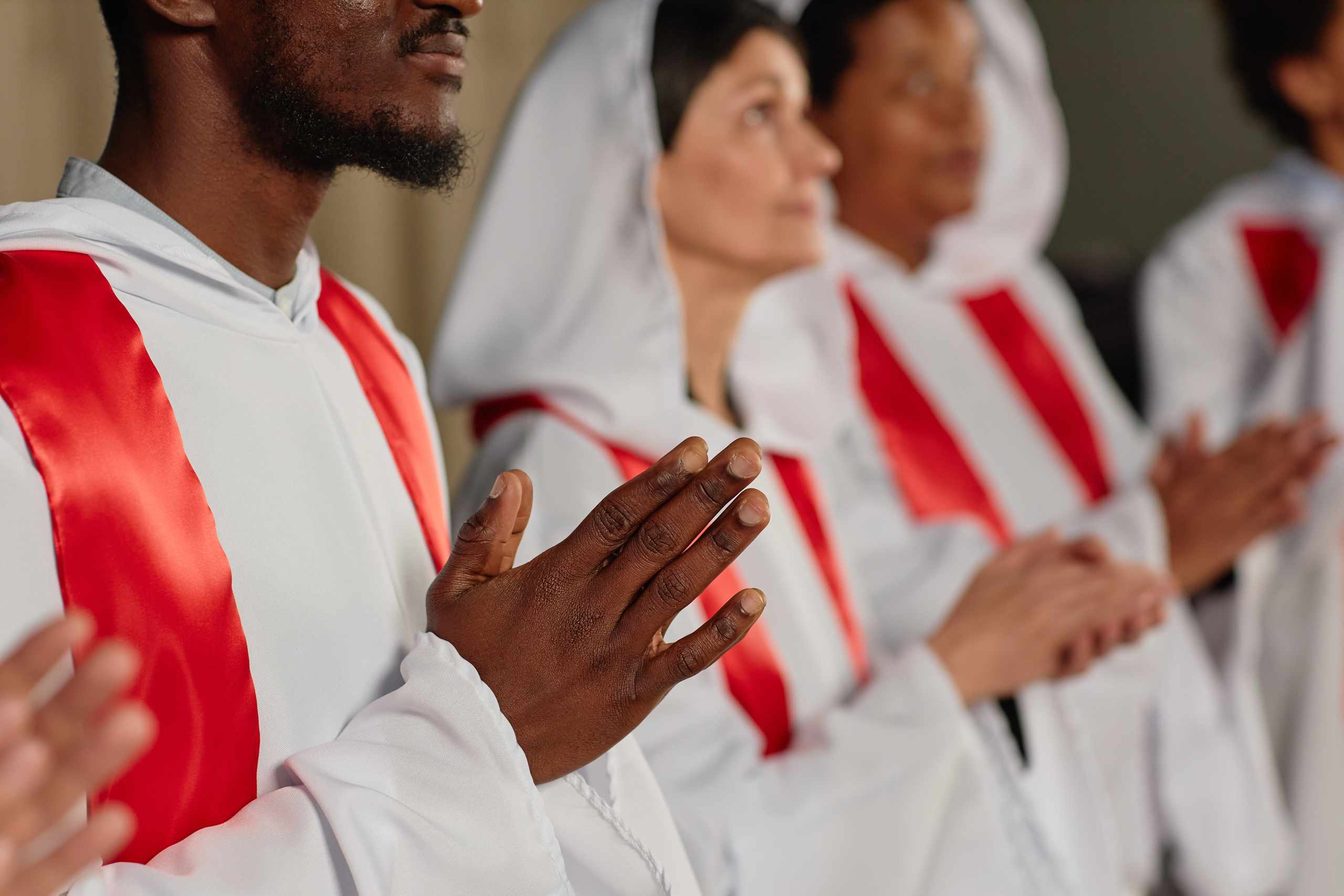
A religion may release instructions about a festival, yet households across different areas celebrate it in distinct ways. Some pray together at a mosque, church or temple, others share a meal at home, and some blend religious practices with local customs. This doesn’t necessarily imply that everyone is misinterpreting the religion. It means that doctrine, community norms, individual circumstances, and inherited custom all shape actual religious practice.
Doctrine typically comes from authoritative sources of religious learning. These can be holy books, legal codes, synods, clergy, scholars, or institutional pronouncements. These sources tell you how a religion’s adherents should think about a belief or ritual, and they provide useful evidence, but they only reflect one aspect of religious life. A formal decree cannot tell you how a person balances a faith commitment with a work schedule, family pressure, relocation, illness, local habit, or intra-faith debate.
Practice shows how a religion is interpreted in concrete settings. Two people might accept the same doctrine, but live it out in different ways through daily prayer, dress, diet, communal worship, charity, or festival observance. A practice can also shift if a community relocates to a new country, or if the younger generation speaks a different language from their elders. Religion is shaped by more than doctrine; it emerges in homes, schools, friendships, material objects, and everyday routines.
To analyze this distinction, select one specific religious practice and split your notes into two columns. Column 1 should contain what an official source says about the practice. Include the author, publisher, intended readership, publication year, and the genre of the source. Column 2 should include examples of how the practice looks in a certain community or in a specific case study. Don’t compare a general statement with a broad generalization about what “people do.” Each side must have a clear context.
Students often treat divergence from doctrine as proof of religious hypocrisy or ignorance. This is frequently a premature judgment. Someone may follow a particular version of a multi-faceted belief, modify a religious observance because of hardship, or prioritize one religious duty over another. There could even be a conflict between official religion and personal belief. Religious studies doesn’t judge these choices, it just wants to know why the person made them and how they understand their own actions.
This is another reason why source selection matters. A website from an official body can clarify doctrine, while an interview, a community ethnography, a diary, a photograph, or a description of a local festival can illuminate lived religion. You don’t need to discard either type of source; you need to read both and identify the places where doctrine and practice converge, diverge, or leave out certain points of view. To check yourself, read every sentence with words like “followers,” “believers,” and “the community” in it and consider whether you should narrow the focus to a specific set of people, location, or era.